What Is the Ideal Size Coffee Roaster to Start Your Business?

I've bought the wrong coffee roaster three times in my career. Not because I'm bad at math or business planning. I bought the wrong roaster because I was answering the wrong question. Most people treat roaster size as a business decision. How much coffee do I plan to sell? What does the spreadsheet say? What can I afford right now? Those are real questions, but they're secondary. The primary question is simpler and harder: what kind of life do I actually want to build?

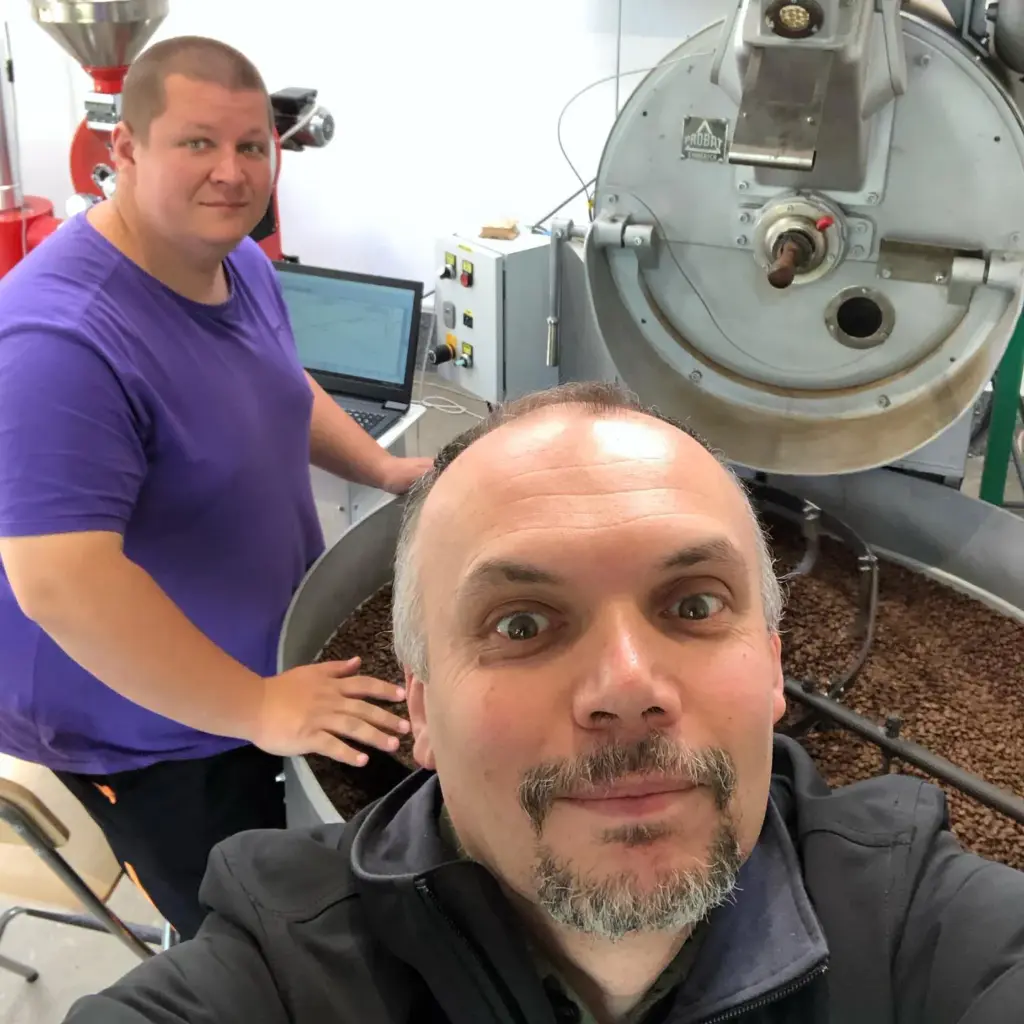
22 kg probat ug 22 coffee roaster and happy coffee business owners

When people ask me about starting a coffee roasting company, they usually want to talk about equipment specs and batch sizes. But that’s backward. This article is about that question. If you’re considering starting a coffee roasting business, or if you’re already roasting at home and thinking about going commercial, the numbers matter less than you think. What matters more is whether you’re designing a business around your life or letting the business design your life for you.

You can roast less on a big roaster. You can’t roast more on a small one. That simple truth is something I learned the hard way, three times over.

My First Mistake Starting a Coffee Roasting Company: A Home Roaster

My first commercial roaster was an Alpenröst. A home coffee roaster. It held 250 grams of green coffee. I used it commercially anyway, in my coffee shop in Slovakia. The idea was simple: roast fresh coffee every day, serve it immediately, charge more for quality.

I loved roasting. I genuinely did. But I had heavily underestimated what my struggling coffee shop would need. Instead of roasting the best coffee I wanted to roast, I became sloppy. I was playing catch-up constantly. Roasting coffee between customers. Roasting coffee when I should have been doing everything else a failing business needed. The joy turned into desperation, and desperation doesn’t produce good coffee.

The lesson wasn’t about technique or beans. The lesson was that I had trapped myself in a system that couldn’t support what I was trying to build.

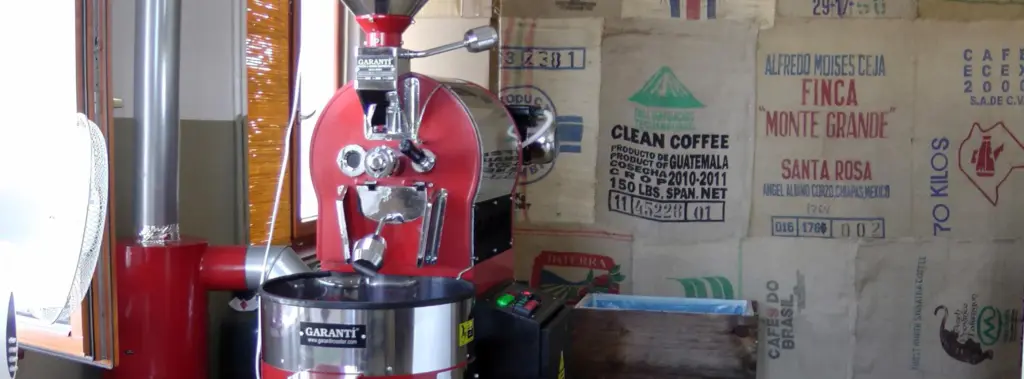
red coffee roaster garanti 5kg capacity

Green Plantation and the 5 kg Mistake

When we launched Green Plantation Coffee in 2011, Slovakia’s first specialty coffee roastery, I thought I had learned my lesson. We bought a 5 kg (11 lb) roaster. It seemed prudent. Conservative. Smart.

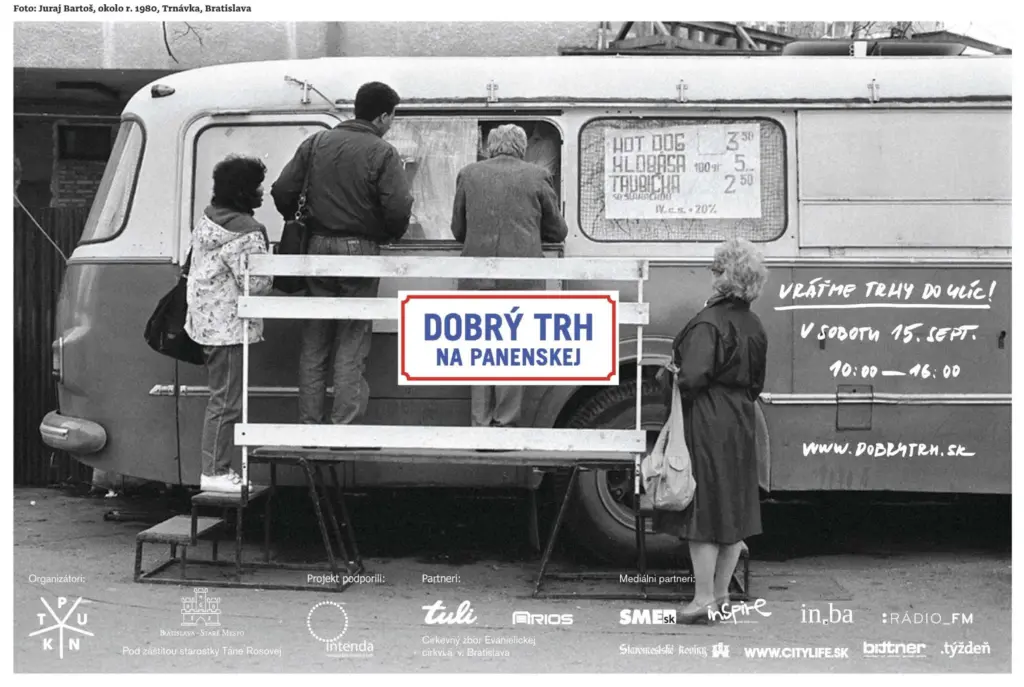
We roasted for a Saturday farmers market in Bratislava called Dobrý trh. One of our regular customers at the market was this guy in a bohemian outfit. Slightly weird, artistic. He’d come for an espresso and talk about how he was going to open the best coffee shop in Bratislava. As a nice, polite human, you’d say, “Of course, that sounds great!” But your lizard brain would say, “Keep dreaming, buddy.”

Well, he did it. Not one coffee shop. Three. The best coffee shops in Bratislava at the time. Urban House, Urban Space and Urban Bistro.

It only worked for about 12 to 14 months before he needed more coffee than we could produce. Not slightly more. Significantly more. And he needed it consistently, on schedule, without us roasting every single day to keep up.

My business partner Peter was roasting day and night on that 5 kg roaster while trying to do all the CEO work. Burnout was imminent. We were staring at a choice: lose our main customer or come up with serious cash and upgrade immediately.

Here’s what was actually at stake. If this customer didn’t happen, we would have never really made it. Having our coffee in the best coffee shops in Bratislava opened doors to many others. This wasn’t just about one account. It was about legitimacy. It was about survival.

I had to put my own money into upgrading to a 15 kg (33 lb) roaster. Not the company’s money, because the company was still bleeding cash. My own money. And we had to do it fast.

Because I had the funds to upgrade quickly, we made it. We became one of the top specialty coffee brands in Slovakia. That one event at Dobrý trh, and the fact that we could upgrade immediately from my personal savings, changed everything. If we couldn’t have scaled when that opportunity hit, we would have stayed a tiny brand. Or disappeared entirely.

That’s when I understood something I should have known from the beginning: undersizing your roaster doesn’t just limit growth. It threatens the business itself. You can’t suddenly roast more coffee when opportunity arrives. You’re stuck.

dobry trh market

My Demons Made Me Undersize my Coffee Business. Do You Have Them Too?

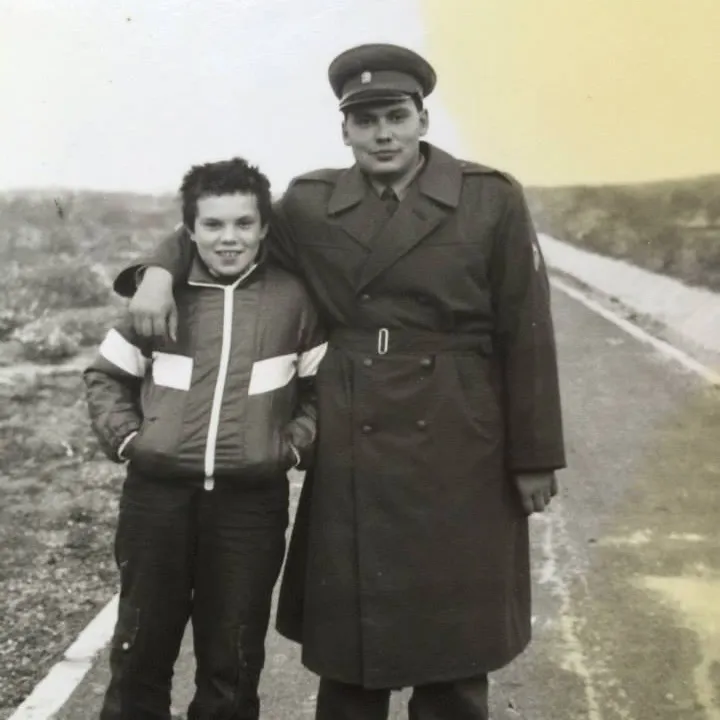
valerian in daqrk communism

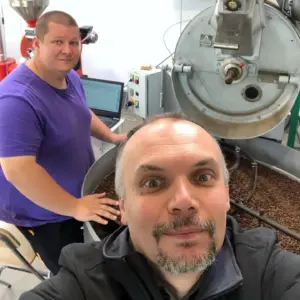
I grew up in communist Czechoslovakia. (PS: can you guess which one is me on the photo?) Entrepreneurship wasn’t just discouraged. It was illegal. You worked for the state, or you existed in a gray zone of tolerated activity, always under suspicion, always vulnerable.

After the Velvet Revolution in 1989, the country opened up. But I was a teenager. My family had no money, no business experience, no template for building something. The early 1990s were chaotic and poor. You survived. You didn’t dream big.

That mindset follows you. Even decades later, even when conditions change, you still think small. You hedge. You plan for failure instead of success. You buy the roaster you can afford instead of the roaster you actually need.

But your demons might look different. Maybe it’s the “I don’t deserve success” demon that whispers you should stay small and humble. Maybe it’s the “I’ll wait until I’m really ready” demon that keeps you in preparation mode forever. Maybe it’s the “what if I fail spectacularly” demon that makes undersizing feel like protection instead of self-sabotage.

I see this in other people who ask me for advice. The hesitation isn’t about money. It’s deeper than that. It’s fear dressed up as prudence. And sometimes, it’s old trauma pretending to be a business plan.

If you recognize any of this in yourself, you’re not alone. But you need to resolve it before you start a brand. These demons will make every decision for you if you let them. And they’ll always choose small.

Business Plans Are Fiction. Your Life Plan Is Real.

Early-stage business plans are mostly fiction. You don’t know your real costs yet. You don’t know your actual market. You don’t know how long it takes to build trust with wholesale customers or how quickly word of mouth will spread at a farmers market.

When starting a coffee roasting company, most people obsess over projected sales and growth curves. They should be obsessing over something else entirely.

What you do know is what kind of life you want. Not just survival. Not just paying rent. I mean the actual life you want to live.

How much money do you need to be happy? To feel secure? To do the things that matter to you?

Maybe you want a new road bike every two years. I do. Calculate it in. Maybe you want to travel through China on fast trains, exploring food and coffee in different cities. Count it in. Maybe you collect something weird, like antique hair clippings. Count it in anyway.

You’re not building a business to create a limited life. You’re building a business to create a happy life. That’s the whole point.

Let’s work with a real example. Say you want $8,000 a month. That’s a good worldwide average goal. Of course, if you live somewhere like California, this needs to be bigger because awesome places cost more.

Break it down. Maybe $5,000 for living expenses. $800 for hobbies and travel. $1,200 for savings and investments. $1,000 for your roaster lease payment. That’s your real number. Not what you think you should want. Not what sounds humble. What you actually need for the life you’re building.

Then work backward. How much coffee do you need to sell to generate $8,000 a month? Specialty coffee margins are good. Better than most food businesses. If you design your business right, they’ll support the life you want.

Once you know how much coffee you need to sell, you can figure out how much you need to roast.

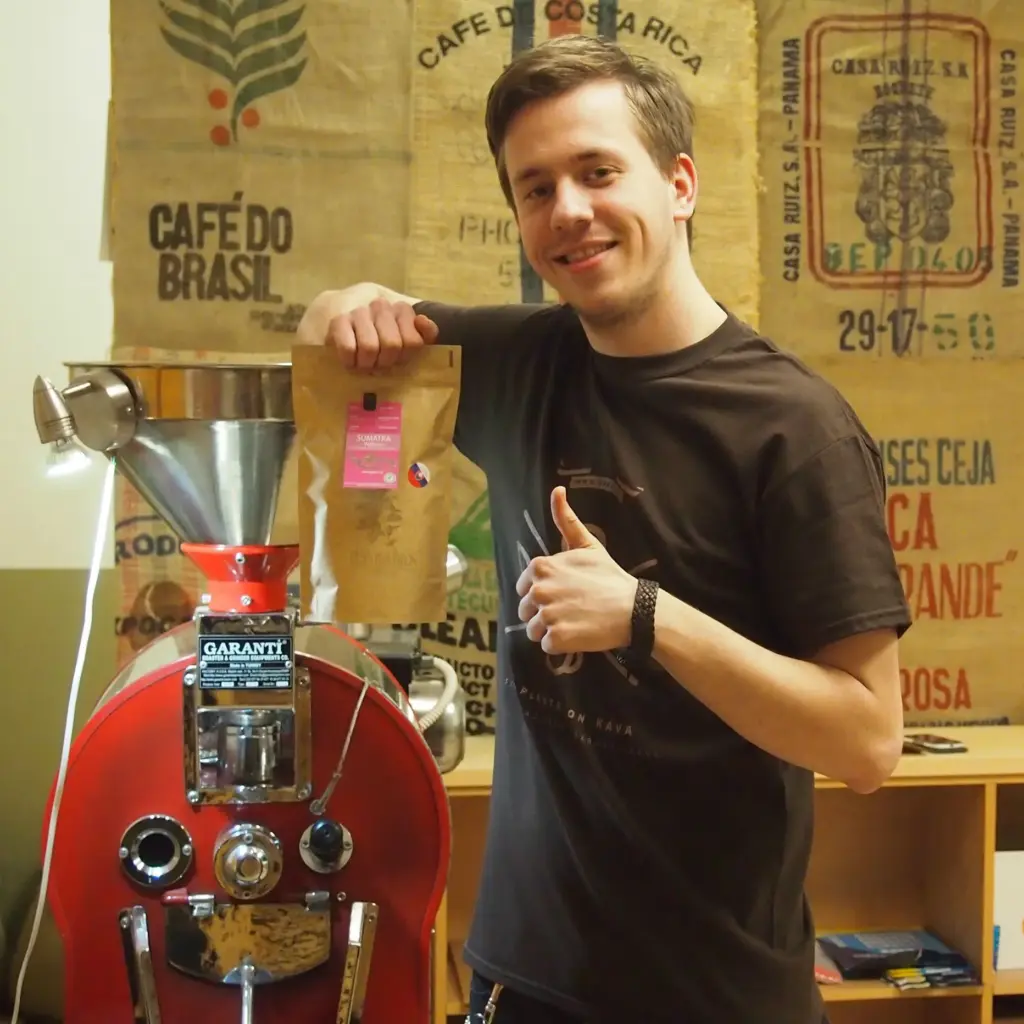
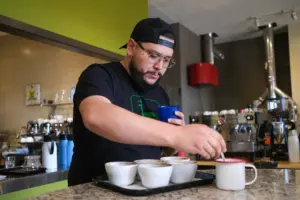
coffee roaster starting his business

How Many Times a Week Should You Roast Coffee?

One or two roast days per week is better than five. That gives you flexibility. If you roast once a week, you need capacity to handle your full weekly volume in one session. If you roast twice, you split it.

Roasting five days a week is a trap. You’re always roasting. You’re never selling. You don’t have time to visit customers, develop new accounts, or handle the rest of the business.

I know what you’re thinking. But it’s hard to sell 8 kg (18 lb) of freshly roasted coffee.

If that’s true, don’t even start a coffee business. Just don’t.

Most people I talk to who are serious about starting a coffee roasting company land somewhere between 15 kg (33 lb) and 30 kg (66 lb) for their first commercial roaster. Not because those sizes are trendy. Because they allow flexibility.

If you buy a 15 kg (33 lb) roaster and only need to roast 30 kg (66 lb) that week, you run two batches and you’re done. If you buy a 5 kg (11 lb) roaster and suddenly need to roast 100 kg (220 lb), you’re in trouble. You can’t add capacity quickly. You’re stuck.

The other thing people miss: if you can’t sell half a batch, you probably don’t have a business yet. You have a hobby with revenue. That’s fine, but it’s different. A 15 kg (33 lb) roaster producing 7.5 kg (16.5 lb) of roasted coffee per batch isn’t a problem if your customers are buying 10, 15, 20 kg at a time. But if you’re selling 1 kg bags to friends, you’re not ready for a commercial roaster at all.

Why Small Coffee Roasters Lock You in a Hamster Wheel

A small roaster traps you in ways that aren’t obvious until it’s too late.

Look at what happened with Urban House. Peter was roasting day and night on that 5 kg roaster. If we hadn’t been able to upgrade immediately, we would have lost that customer and stayed a tiny brand forever. That’s the hamster wheel. You’re running constantly just to keep up, with no energy or time to actually grow.

Unless you have free capital to purchase a bigger roaster, once your business starts growing, you can’t just shut down for months while you sell your old roaster and buy a new one. Your customers need coffee. Your revenue stops if you stop roasting.

The resale market for 1 to 3 kg (2.2 to 6.6 lb) roasters is tough. Smart people know these roasters are awful for production, and they won’t even be good for sample roasting once you upgrade to a bigger machine. In most scenarios, 5 kg (11 lb) roasters fall into the same trap.

In my experience, 1 to 3 kg capacity roasters, and in most scenarios 5 kg roasters, are lost in translation. They’re too small for a real business and too big to justify keeping around once you outgrow them.

The "Proving the Concept" Myth

People often say they want to start small to prove the concept. That makes sense in theory. Test demand, learn the market, minimize risk. I agree with the instinct.

But a small roaster is a bad way to prove a concept. What you’re really proving is whether people will buy your coffee. You don’t need to own a roaster to prove that.

This is how I built my American brand, Unleashed Coffee. My business partner William Murad, a coffee farmer, and I used a co-roasting facility. We made profits within four years. But then we realized something important: this model wasn’t enough to change our lives. At that point, we knew what we wanted from our lives, and this business model wasn’t giving it to us.

So we sold the brand and gave someone else a chance. We moved on to different dreams. I started teaching and coaching coffee, which turned out to be the best thing that ever happened in my life. I wouldn’t have been able to do this without the Unleashed Coffee experience.

You can co-roast with someone who already has capacity. You can white-label coffee from an existing roaster and sell it under your brand. You can roast samples at home and bring them to potential customers.

Proving the concept is about selling, not roasting. If you can sell 50 kg (110 lb) of coffee a month using someone else’s roaster, you’ve proven something. If you buy a 3 kg (6.6 lb) roaster and spend all your time roasting instead of selling, you’ve proven nothing except that you can operate a machine.

The roaster comes after you know you can sell. Not before.

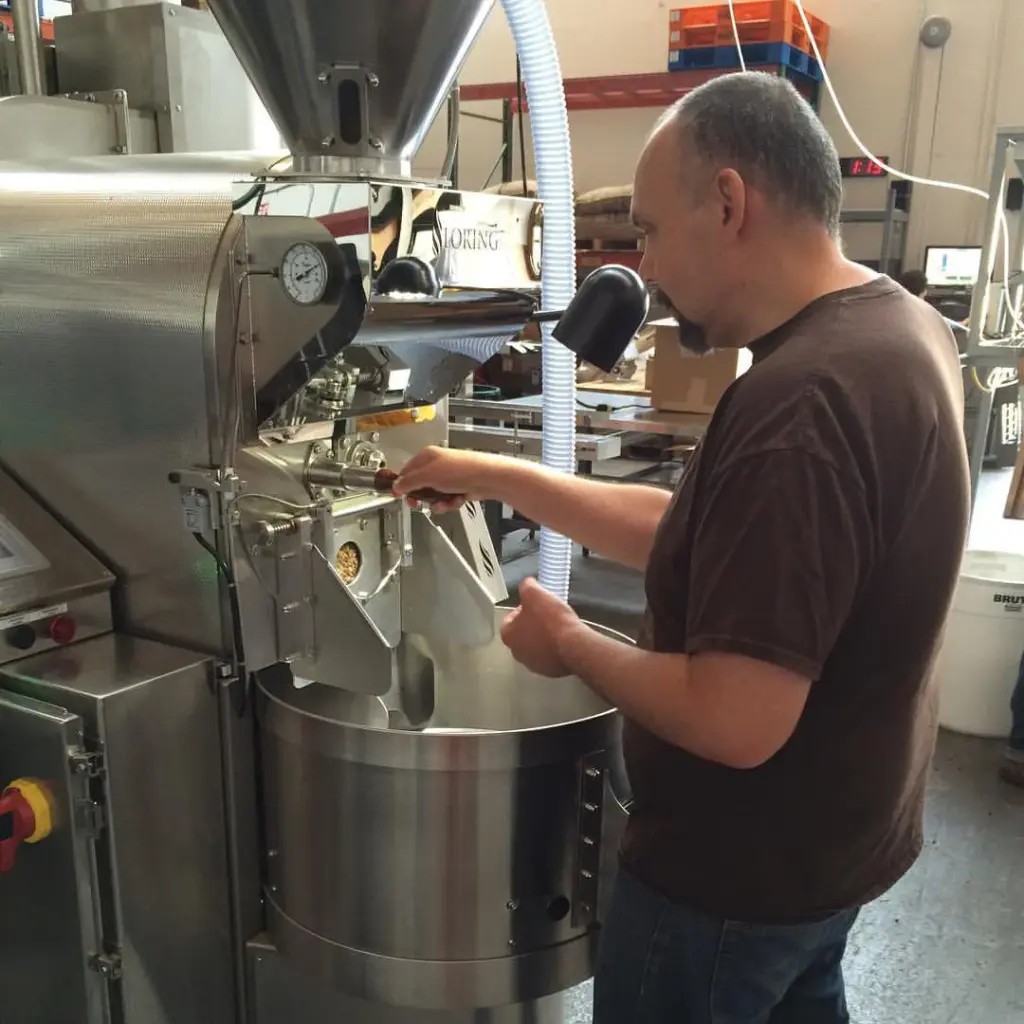
valerian is roasting on a loring falcon

So What Is the Right Size of Coffee Roaster?

I’ve started two coffee brands. I feel like I’ve served my time. But if you forced me to do this again, I wouldn’t go under a 30 kg (66 lb) roaster per batch. That’s where my dreams start.

I do this exercise in my Coffee Roasting & Business course at Boot Coffee, and our usual numbers are around 15 kg (33 lb) per batch as a good start, even for small dreamers who don’t have road biking as a hobby.

Choosing a roaster size isn’t about optimism or pessimism. It’s not about believing in yourself or hedging your bets. It’s about clarity.

So what size coffee roaster should you buy when starting a coffee roasting company? It depends entirely on the life you’re designing.

You need to know what kind of life you’re building. How much money you need for the life you actually want. How much time you want to spend roasting versus everything else. How much risk you can actually handle.

Those answers lead to a roaster size. Not the other way around.

I bought the wrong roaster three times because I didn’t ask those questions first. I let circumstance, fear, and old thinking make the decision for me. You don’t have to do that.

Figure out the life first. The business plan follows. The roaster is just a tool to execute what you’ve already decided.

But What If You Can't Afford a X kg Coffee Roaster?

I know what you’re thinking. A 15 kg roaster, even used, costs serious money. You don’t have $40,000 – $150,000 sitting around.

That’s fine. But don’t buy a 5 kg roaster as a compromise. A bad roaster is more expensive than no roaster.

If you can’t afford a 15 kg roaster, even used, then co-roasting or white-labeling is a great option to start building your brand. That’s exactly what I did with Unleashed Coffee. Use someone else’s capacity. Build your customer base. Prove you can sell. Save money from actual profits, not from hope.

When you have the capital and the customer base to support a proper roaster, then buy it. Not before.

Let's Run the Numbers

Here’s how to work through this. Let’s use a very conservative scenario with our $8,000 a month goal. I know what you’re thinking: $8,000 a month is a very small dream. It’s barely enough to live comfortably in many places. But even with this modest target, you’ll see why a 15 kg roaster makes sense.

Let’s say your profit is $5 per 12 oz (340 g) bag of roasted coffee. That’s conservative, especially if you’re selling wholesale or just starting out. Direct-to-consumer and retail can be much better, but we’ll stay conservative.

At $5 per 12 oz bag profit, you need to sell 1,600 bags of 12 oz bags per month to hit $8,000. That’s 400 bags of 12 oz bags per week, or about 300 pounds (136 kg) of roasted coffee per week.

Now here’s the important part: don’t forget roasting loss. You might lose about 20% of weight during roasting, depending on your roast degree. So to get 300 pounds (136 kg) of roasted coffee, you actually need to roast 375 pounds (170 kg) of green coffee per week.

Let’s say you roast Monday and Tuesday. You roast on those two days, then spend the rest of the week packaging, shipping, and doing all the important stuff like sales, marketing, customer relations, demos, and building the business. That’s about 190 pounds (86 kg) of green coffee per roast day, which produces 150 pounds (68 kg) of roasted coffee, or about 200 bags of 12 oz (340 g) coffee.

A 15 kg (33 lb) roaster running at capacity gives you about 26 pounds (12 kg) of roasted coffee per batch. To get 150 pounds (68 kg) of roasted coffee, you need about six batches per roast day.

Depending on your roast profiles, you can comfortably roast four batches per hour on a 15 kg roaster. Sometimes five if you’re efficient. Six batches means you’re done in about 90 minutes, maybe two hours. That’s a half day. You’re finished by mid-morning or early afternoon.

The rest of Monday and Tuesday is yours for packaging those 200 bags of 12 oz (340 g) coffee and prep. Wednesday through Sunday is for sales, customer visits, farmers markets, building relationships, and actually growing the business.

With a 5 kg (11 lb) roaster? You’d get about 9 pounds (4 kg) of roasted coffee per batch. You’d need about 17 batches per roast day just to hit your conservative $8,000 a month goal. Even at four batches per hour, that’s over four hours of continuous roasting. That’s not a half day. That’s a full exhausting day, and you’d be doing it four or five days a week just to keep up.

Here’s the other critical piece: designing your business for two roast days per week instead of five doesn’t just give you time for other business activities. It gives you plenty of space to grow into. When that good customer shows up, when demand increases, when opportunity knocks, you have room to respond. You can add a third roast day. You can run more batches on your existing days. You have capacity.

If you’re already roasting five days a week just to hit your baseline goal, you have nowhere to go. You’re maxed out. Growth becomes impossible without buying another roaster, and we’re back to the Urban House problem, except this time you might not have the cash to upgrade quickly.

Let’s look at what happens when you actually grow.

Say your business takes off and you’re ready to scale up. You hire people to help with roasting and packaging. You’re roasting five days a week, eight hours a day. What’s your maximum capacity?

With a 15 kg (33 lb) roaster at four batches per hour, eight hours a day, five days a week, you’re producing about 4,160 pounds (1,890 kg) of roasted coffee per month. That’s about 5,500 bags of 12 oz (340 g) coffee. At $5 profit per bag, you’re generating $27,500 per month. That’s real money. That’s a business that can support employees, reinvestment, and your life.

With a 5 kg (11 lb) roaster at the same pace—four batches per hour, eight hours a day, five days a week—you’re producing about 1,440 pounds (653 kg) of roasted coffee per month. That’s about 1,920 bags of 12 oz (340 g) coffee. At $5 profit per bag, you’re generating $9,600 per month.

Same amount of labor. Same amount of time. The 15 kg roaster produces nearly three times as much revenue as the 5 kg roaster.

Of course, at these volumes you need employees for packaging and roasting. But here’s what matters: the 15 kg roaster can actually support paying those employees and still generate meaningful profit. The 5 kg roaster barely clears enough to justify the labor costs.

This is just an example based on conservative numbers. You should do this exercise with your own numbers, your own profit margins, and your own growth plans. Maybe you want $12,000 a month. Maybe your profit per 12 oz bag is $8. Maybe you’re planning to sell 5-pound (2.3 kg) wholesale bags instead of 12 oz retail bags. Run your own numbers. Be honest about what you actually want your life to look like.

The roaster isn’t the business. The roaster is just the tool. The business is everything else, the sales, the relationships, the time to think and plan and respond to opportunities.

 Three times, I bought too small. Don’t do what I did. The roaster you choose is a bet on the life you’re building.
Author :

>