Why Coffee Jobs Are Among the Most AI-Proof Careers You Can Choose

If you've been watching the news about artificial intelligence, you've probably felt that low hum of anxiety. Another industry disrupted. Another skill set obsolete. Another round of "adapt or perish" think pieces from people who adapted once, in 2009, and have been dining out on it ever since.

ai proof job - woman roasting coffee on artisanal coffee roaster

The fear is real, and it’s not irrational. AI is remarkably good at pattern recognition, data processing, and executing repeatable tasks at scale. But here’s what gets lost in the panic: AI is terrible at being human. And some careers require you to be so fundamentally, irreplaceably human that automation isn’t just difficult. It’s pointless.

Coffee is one of those careers. Not because the industry is low-tech or stuck in the past, but because the work itself depends on abilities that only humans possess. When we talk about AI-proof coffee jobs, we’re not talking about hiding from progress. We’re talking about skills that sit outside the reach of algorithms entirely: sensory perception, physical intuition, emotional presence, and creative judgment under conditions that no dataset can predict. These are careers you can learn without prior coffee experience, and they offer something increasingly rare in the modern economy: work that becomes more valuable as automation advances.

What Makes a Coffee Job AI-Proof

Before we look at specific roles, let’s define what we mean. An AI-proof job isn’t one that uses old technology or avoids computers. It’s a job where the core work depends on distinctly human capabilities that machines cannot replicate: subjective sensory experience, emotional intelligence, physical dexterity in unpredictable environments, and creative judgment that responds to context machines cannot fully capture.

AI replaces tasks that follow clear rules and patterns. It excels at consistency, speed, and processing structured information. Coffee careers survive because they depend on the opposite: the messy, interpretive, irreducibly human parts of work that algorithms can measure but never truly perform. A machine can detect the presence of a chemical compound. It cannot experience how that compound tastes in context, or decide whether it makes a coffee better or worse. That gap is not a technological limitation waiting to be solved. It’s a fundamental difference between computation and consciousness.

This isn’t about romanticism. It’s about physics and neurology. Let’s talk about what actually makes these careers resistant to AI, and why the people who do this work aren’t just safe from automation. They’re becoming more valuable because of it.

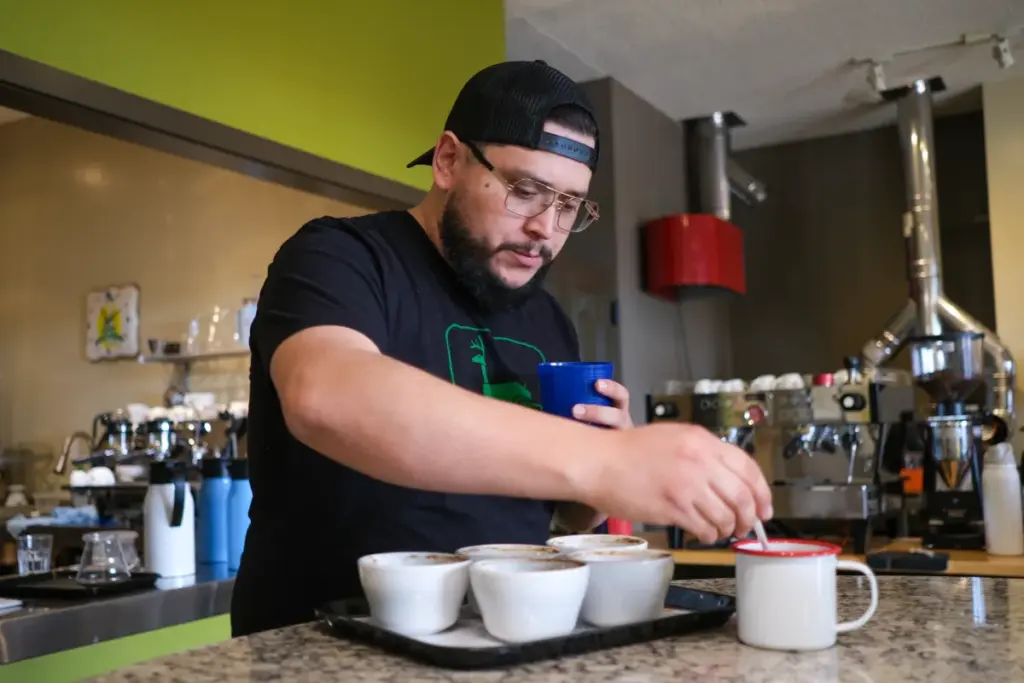
ai proof job - person cupping coffee and scoring it with the coffee value assessment

Sensory Specialist and Q-Grader: Coffee Jobs AI Can't Replace

Here’s a sentence you should memorize: AI can measure compounds, but it cannot experience flavor.

A mass spectrometer can tell you that a coffee contains 2-furfurylthiol, which contributes a roasted, slightly sulfurous note. What it cannot tell you is whether that note feels balanced, pleasant, or out of place in context. It cannot tell you if it reminds someone of their grandmother’s kitchen or a gas station restroom. Flavor is not a chemical fact. It’s a subjective, culturally embedded, deeply human experience.

This is why Q-graders and sensory specialists represent some of the most future-proof careers in coffee. These professionals evaluate coffee quality through cupping: a formalized tasting process that assesses fragrance, aroma, flavor, aftertaste, acidity, mouthfeel, sweetness, and overall qualities of coffee. They assign scores. They explain these properties to other humans in a human way. They make buying decisions. They determine whether a coffee is worth $3 per pound or $30.

No algorithm can do this, because the work isn’t analytical in the way AI understands analysis. It’s interpretive. A Q-grader doesn’t just detect bitterness. They assess whether that bitterness is clean and structured, or harsh and astringent. They contextualize it within a flavor profile. They decide if it’s a defect or a feature. That requires a lifetime of sensory memory, cultural fluency, and judgment that comes from tasting plenty of coffees in dozens of contexts.

Why this job resists AI automation:

  • Human sensory perception integrates subjective experience, cultural context, and emotional memory in ways chemical analysis cannot capture
  • Quality judgment requires interpreting whether a flavor is desirable within a specific context, not just identifying its presence
  • Sensory skills develop through embodied experience and cannot be reduced to data points or training sets
  • Professional training through organizations like the Specialty Coffee Association makes these skills accessible to anyone willing to develop their palate

And here’s the kicker: those skills transfer. If you develop a trained palate in coffee, you’re building a portable, adaptable skill set that applies to quality control, product development, sourcing, and roasting. You’re not learning to do one job. You’re learning to think in a way that makes you irreplaceable across an entire industry.

Who this role suits: People who are detail-oriented, patient, curious about flavor, like to learn and experience the world, and comfortable with partly subjective evaluation. If you’ve ever described a wine as “herbaceous” or argued about whether a dish needs more acid, you’re already halfway there. This is not a rocket science, everybody can learn this.

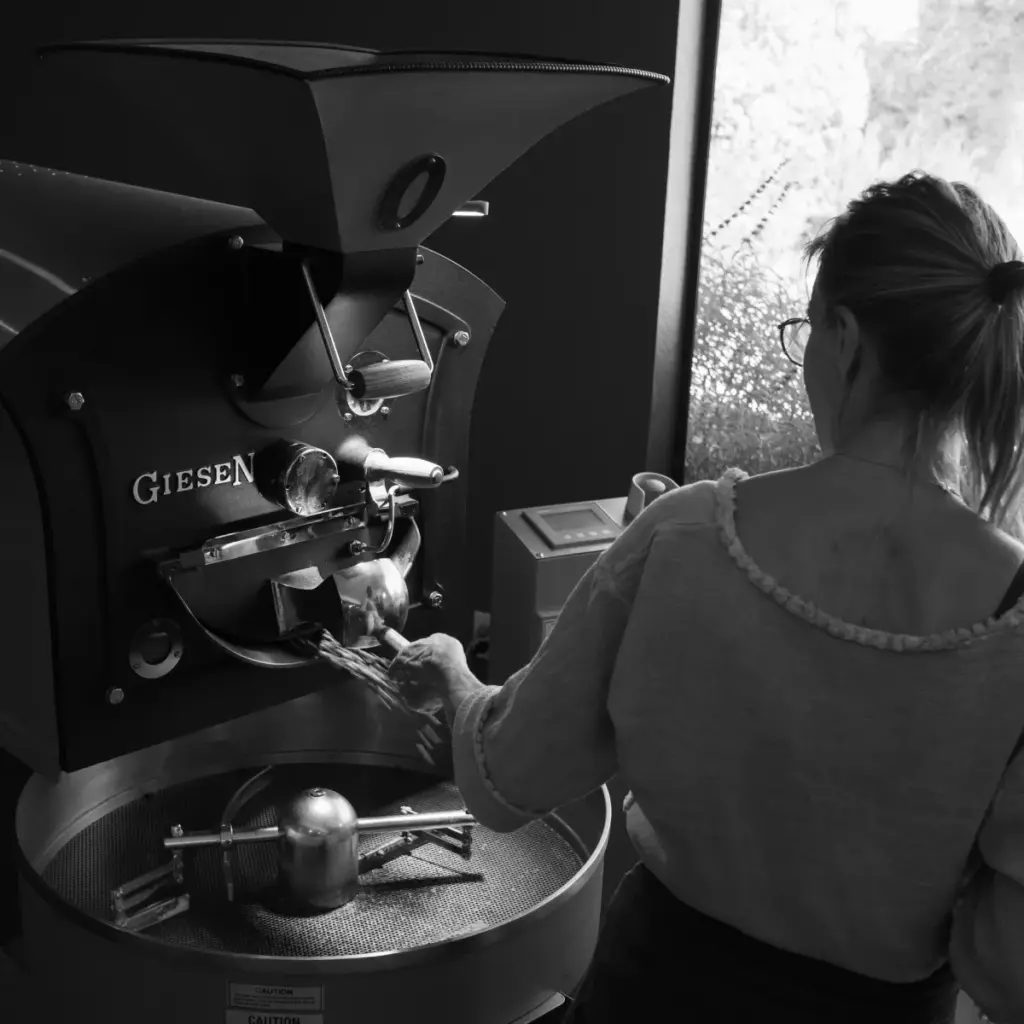
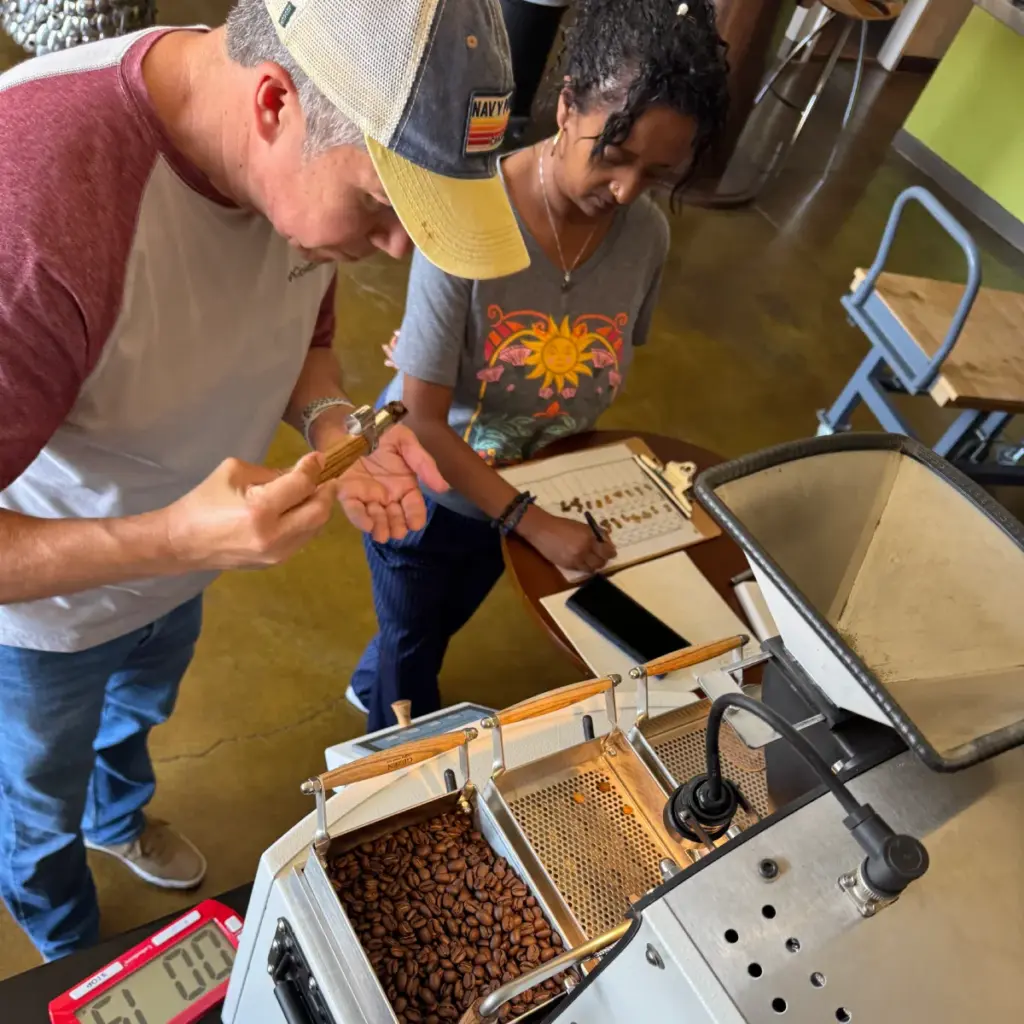
ai safe job coffee roasting man and woman roasting coffee

Head Roaster and Product Developer: Creative Coffee Careers Safe From AI

Let’s be honest: production roasting is increasingly automated. Large-scale roasters use software to monitor temperature curves, adjust airflow, and replicate profiles with precision. That’s not a threat. That’s progress. It frees roasters from babysitting machines so they can focus on the part of the job that actually matters.

And that part is creative.

A head roaster doesn’t just execute roast profiles. They design them. They decide what coffees to buy, how to showcase their best qualities, and how to build a product lineup that makes sense for a business and its customers. They taste obsessively. They blend. They tweak. They respond to variables that no software can predict: how a new crop tastes compared to last year’s, how a coffee changes over time, how customers respond to a flavor they didn’t expect.

This is why the coffee industry jobs AI can’t replace include roasting at the creative level. Yes, machines can roast. But machines cannot decide what to roast, why it matters, or how it fits into a sensory vision. That requires taste, intuition, and the ability to balance art and commerce in real time.

Why this job resists AI automation:

  • Product development requires creative vision and the ability to imagine flavor profiles that don’t yet exist
  • Roasters make sensory-driven decisions that balance quality, customer preference, and business constraints simultaneously
  • Responding to crop variation and aging characteristics demands adaptive judgment based on lived sensory experience
  • The role combines technical skill with artistic interpretation in ways that defy algorithmic prediction

Think of it this way: AI can paint by numbers. It cannot decide what the painting should be.

The distinction that matters: If your job is to press “start” on a machine, yes, that’s replaceable. If your job is to imagine a product, refine it through iteration, and make judgment calls based on sensory feedback, you’re doing work that sits firmly outside the automation lane.

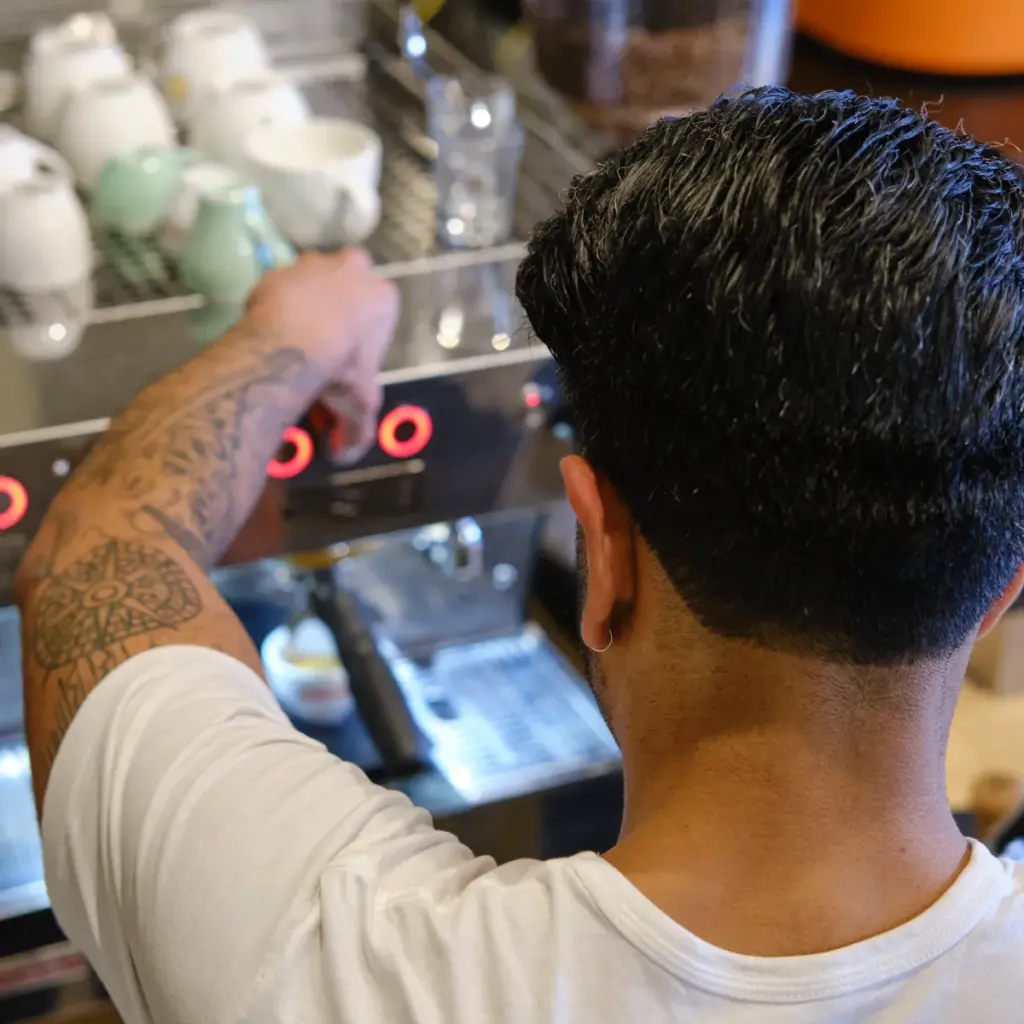
ai proof job barista pulling a shot on la marzocco

The Future-Proof Barista: Human Connection AI Cannot Automate

Here’s a prediction: in ten years, the best baristas will be valued the way sommeliers are now.

Not because the drinks will be more complicated. Because human presence will be rarer, and therefore more valuable.

We’re already seeing the early signs. Automated espresso machines exist. Self-serve kiosks are in airports. Apps let you order ahead and skip the counter entirely. And yet, specialty coffee shops are thriving. Why? Because people don’t go to a coffee shop just for caffeine. They go for the experience of being seen, of small talk, of someone remembering their order. They go because a good barista makes them feel like a regular, even if it’s their first visit.

This is the future-proof core of the barista role, and it has nothing to do with milk foam. Baristas are entertainers. They’re hosts. They set the emotional tone of a space. They turn a transaction into a moment. In a world where most interactions are mediated by screens, that becomes a premium service, not a commodity.

Why this job resists AI automation:

  • Emotional intelligence and the ability to read social cues in real time cannot be programmed or replicated by machines
  • Creating genuine human connection requires presence, warmth, and improvisation that responds to individual customers
  • The experiential value of hospitality increases as automation makes human interaction scarcer and more premium
  • These interpersonal skills are learned through practice, not prerequisites, making the role accessible to career changers

And here’s the uncomfortable truth for anyone building an AI-powered coffee kiosk: you cannot automate charisma.

A barista who can read a room, adjust their energy to match a customer’s mood, tell a story about the coffee they’re serving, and make someone’s day slightly better is doing work that machines are not even close to replicating. Emotional intelligence, improvisation, warmth. These are human skills AI can’t replace, and they’re becoming more valuable as everything else gets automated.

What this means practically: The baristas who thrive won’t just be technically skilled. They’ll be people who understand hospitality, enjoy performing, and see their role as creating an experience, not just executing a recipe.

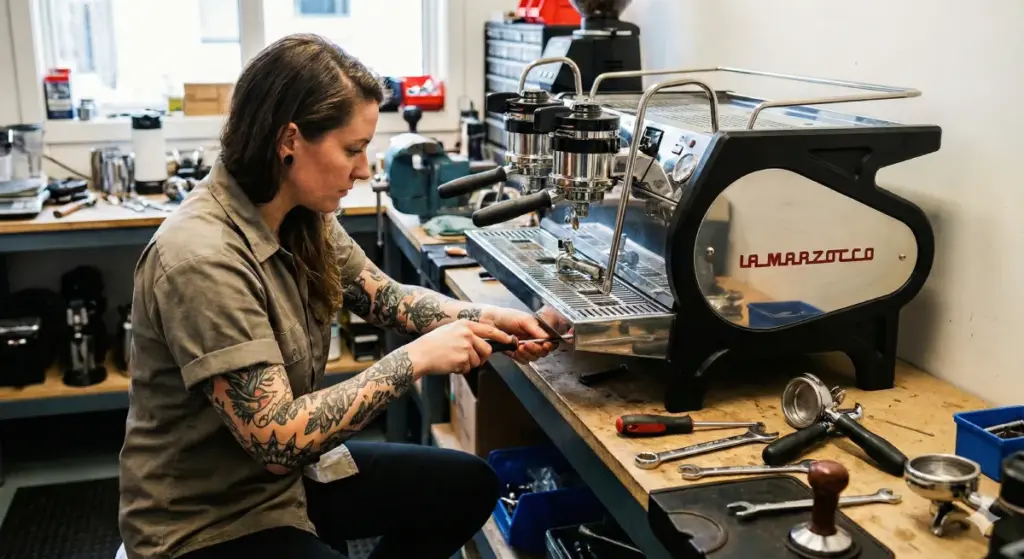
ai irreplaceable job tatoed woman repairing an espresso machine

Coffee Equipment Technician: Physical Work Machines Can't Perform

Here’s a simple test for whether a job is AI-proof: does it require you to physically touch things in unpredictable environments?

If yes, you’re safe.

Coffee equipment technicians troubleshoot, repair, and maintain espresso machines, grinders, brewers, and roasters. The work is tactile, improvisational, and grounded in the real world. Yes, diagnostic software can help identify issues. But software can’t disassemble a stuck grouphead, replace a worn gasket, descale a boiler, or jury-rig a solution when the right part won’t arrive for three days.

This is a career built on mechanical intuition, problem-solving under pressure, and the ability to work with your hands in situations that are never exactly the same twice. Those are precisely the conditions where AI struggles and humans excel.

Why this job resists AI automation:

  • Physical repair work requires manual dexterity and tactile feedback in three-dimensional space
  • Troubleshooting real-world equipment failures involves improvisational problem-solving in unpredictable conditions
  • Mechanical intuition develops through hands-on experience that cannot be simulated or taught through data alone
  • Technical training programs make this career accessible to people with no prior coffee industry experience

And demand is growing. As more coffee businesses invest in high-end equipment, the need for skilled technicians who can keep those machines running reliably is increasing. You’re not competing with automation. You’re supporting it.

Who this suits: People who like solving puzzles, enjoy hands-on work, and have the patience to diagnose problems methodically. If you’ve ever fixed your own car or taken apart an appliance to figure out why it stopped working, this is a natural fit.

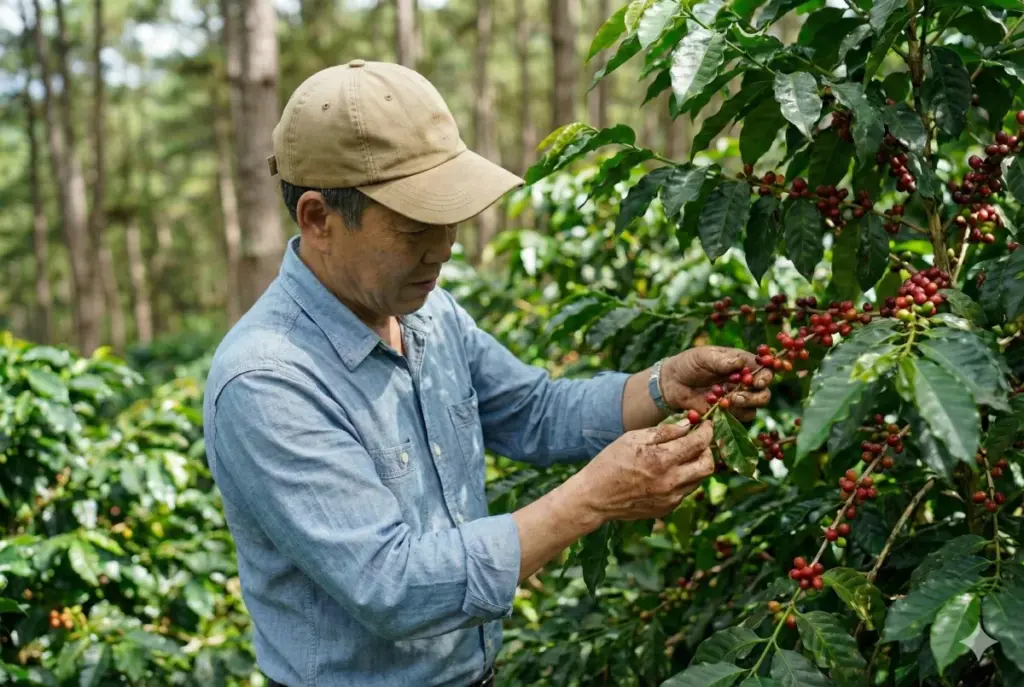
coffee farmer

Coffee Farmer: The Foundation Career AI Cannot Touch

Let’s state the obvious: without coffee farming, there is no coffee industry. No roasters, no baristas, no equipment, no sensory specialists. The entire global supply chain depends on people growing coffee trees, harvesting cherries, processing beans, and making countless decisions that determine quality at the source.

And none of that is getting automated anytime soon.

Farming is physically demanding, context-dependent, and requires judgment that comes from years of experience in a specific environment. When do you harvest? How do you process? What do you do when the weather doesn’t cooperate? These are decisions made by humans, on the ground, responding to conditions that change daily.

Why this job resists AI automation:

  • Agricultural work requires physical labor and environmental responsiveness in unpredictable natural conditions
  • Quality decisions depend on sensory assessment and contextual judgment developed over years in a specific microclimate
  • The craft and stewardship that drive farming motivation exist outside the logic of efficiency and optimization
  • Farming knowledge is often passed through apprenticeship and embodied practice rather than formal education

Yes, technology is improving. Drones can monitor crops. Apps can track fermentation. But the work itself remains profoundly human. And the motivation behind it—craft, stewardship, connection to land—sits outside the logic of automation entirely. People farm coffee because it’s meaningful work, not because it’s efficient.

This is the bedrock of the industry. And it’s not going anywhere.

The reality check: Farming is hard. It’s not for everyone. But if you’re looking for careers safe from AI automation and you want work that feels deeply rooted in the physical world, this is as real as it gets.

The Core Human Skills That Make Coffee Careers AI-Resistant

If you step back and look at these roles together, a pattern emerges. They all depend on abilities that humans have and machines don’t. Here’s what makes these coffee jobs resistant to AI:

  • Sensory perception: Subjective experience of taste, smell, and texture that integrates cultural context and personal memory
  • Emotional intelligence: The ability to read people, create connection, and respond to social cues in real time
  • Physical presence: Manual work in three-dimensional space with tactile feedback and environmental unpredictability
  • Creative judgment: Decision-making that balances competing priorities, responds to context, and imagines possibilities
  • Adaptive expertise: Skills developed through embodied experience in conditions that cannot be fully captured by data

And here’s the reassuring part: these skills are learnable. You don’t need prior coffee experience. You don’t need a technical degree. What you need is curiosity, a willingness to develop your senses and skills, and the patience to get good at something that matters.

The Specialty Coffee Association offers structured education paths for nearly every role we’ve discussed. Organizations like Boot Coffee (for full disclosure, I am teaching at Boot Coffee)provide hands-on training for people entering the industry. The infrastructure is there. The demand is real. The work is human.

If you’re anxious about AI taking your job, maybe the answer isn’t learning to code. Maybe it’s learning to taste, to pour, to fix, to grow. Maybe the future of work isn’t about competing with machines. It’s about doing the things that only humans can do, and doing them well enough that they’re worth paying for.

That’s not a fallback plan. That’s a career. And in an increasingly automated world, coffee offers something rare: AI-proof jobs that remain stubbornly, valuably, undeniably human-centered and secure from algorithmic replacement.

Author :

>